
 EN
EN



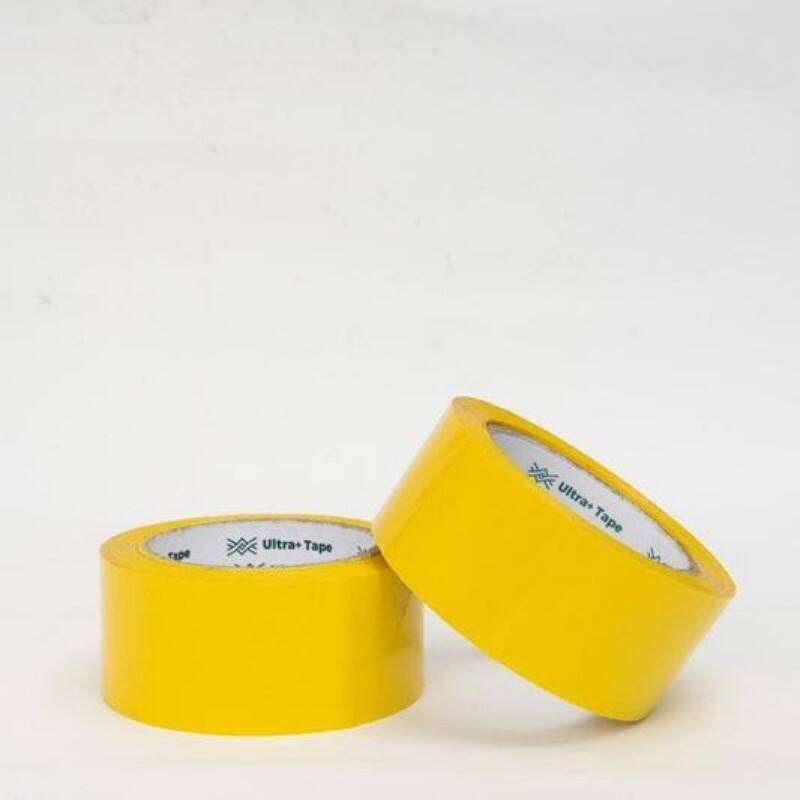
When purchasing adhesive tape for industrial or commercial use, one question that professionals increasingly ask is whether iscc plus tape can truly match the holding power and durability of conventional tape products. This is a fair and practical concern, especially as sustainability-certified materials begin entering supply chains that once relied entirely on standard petroleum-based adhesives and film substrates. Understanding the strength profile of iscc plus tape requires a closer look at what the certification actually governs and what physical properties determine tape performance in real-world applications.
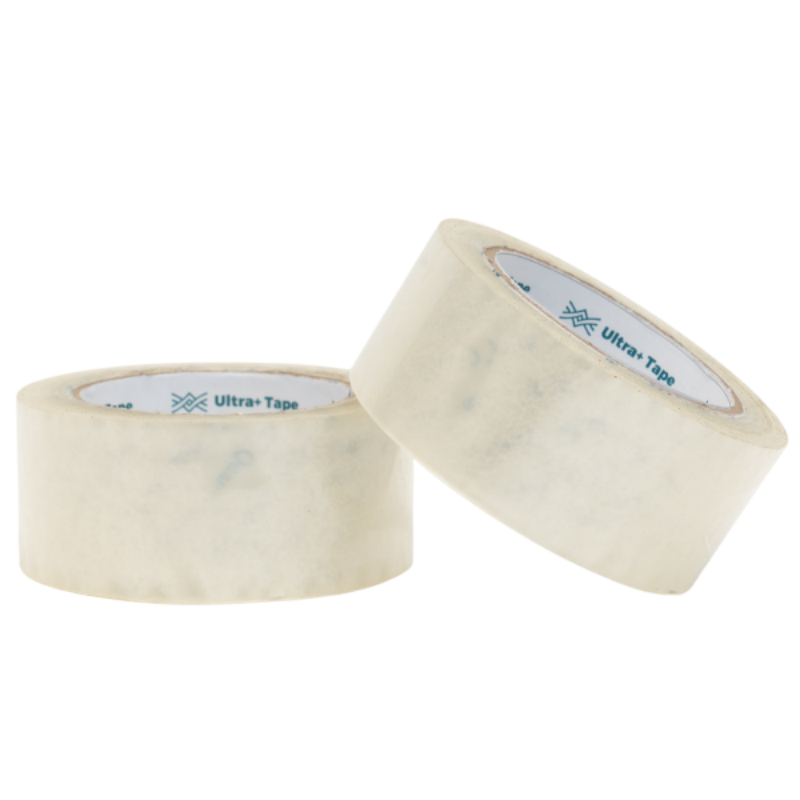
The short answer is yes — iscc plus tape can be just as strong as conventional tape, and in many configurations it performs at an identical or comparable level across standard mechanical tests. However, the full answer depends on how the tape is manufactured, which substrate and adhesive system is used, and what 'strength' means in the context of a specific application. This article breaks down the strength comparison systematically so that buyers, procurement teams, and product developers can make informed decisions when evaluating iscc plus tape against traditional alternatives.
Understanding What ISCC PLUS Certification Actually Governs
The Certification Scope and Its Relationship to Physical Properties
ISCC PLUS is a globally recognized sustainability certification system that verifies the use of bio-based, recycled, or circular feedstocks in a product's supply chain. When a tape product carries the ISCC PLUS designation, it means the raw materials — typically the polymer film, the adhesive, or both — have been sourced or mass-balanced in accordance with certified sustainable inputs. The certification does not specify or regulate the mechanical strength of the final tape product.
This distinction is important because it clarifies that iscc plus tape is not a weaker product by definition. The certification is a chain-of-custody and feedstock traceability standard, not a performance degradation label. A manufacturer producing iscc plus tape uses the same extrusion, coating, and slitting processes as conventional tape manufacturing — only the origin of the raw polymer or adhesive resin differs in terms of its carbon footprint or circular economy credentials.
Because the ISCC PLUS framework operates on a mass balance model, certified and non-certified materials may be processed together in the same facility, with the sustainability attributes allocated mathematically across output volumes. This means the molecular and physical structure of the film and adhesive in iscc plus tape is chemically identical to its conventional counterpart, which directly supports the argument that strength characteristics are preserved.
How Raw Material Origin Affects — or Does Not Affect — Tape Strength
Some buyers assume that bio-based or recycled inputs produce inferior polymers. In practice, bio-based polypropylene and bio-based acrylic adhesives have been demonstrated in laboratory and field testing to match the tensile strength, elongation at break, and tack values of petroleum-derived equivalents. The polymer chain structures are chemically equivalent regardless of whether the carbon atoms originated from sugarcane ethanol, waste oils, or fossil crude.
Recycled-content inputs present a slightly different consideration. Post-consumer recycled polymers can carry variability depending on the quality of the recycling process and the degree of contamination control. However, manufacturers producing iscc plus tape at a commercial quality level apply rigorous quality assurance protocols that filter out variability before it reaches the film extrusion or adhesive coating stage.
In summary, the feedstock origin that defines iscc plus tape certification has no inherent negative impact on the mechanical strength profile of the finished product when manufacturing standards are properly maintained. Buyers should evaluate specific product data sheets rather than assuming a performance gap based on the certification label alone.
Key Strength Parameters: How ISCC PLUS Tape Compares in Testing
Tensile Strength and Elongation Behavior
Tensile strength measures how much force a tape can withstand before the film backing breaks under longitudinal stress. For iscc plus tape using a biaxially oriented polypropylene film substrate, tensile values typically fall within the same range as conventional BOPP transparent tape — generally between 100 and 200 N per 25mm width depending on film gauge. This parity is not coincidental; it reflects the fact that the film's tensile behavior is determined by the polymer's molecular weight distribution and orientation process, not its carbon origin.
Elongation at break is another critical parameter, particularly for tapes that need to conform to irregular surfaces or withstand impact stress. Iscc plus tape manufactured from bio-based BOPP demonstrates elongation values comparable to standard BOPP films, typically in the 100–200% range. This means the tape will stretch and absorb stress in a similar way before failing, which is essential for carton sealing applications where boxes are dropped or compressed during logistics handling.
These results are consistent across multiple independent evaluations of bio-attributed tape products. The performance parity is a key selling point for procurement teams that want to meet sustainability commitments without accepting any compromise in packaging integrity or supply chain reliability.
Adhesion Force and Peel Strength
Adhesion is often where buyers have the most concern when evaluating iscc plus tape. Peel strength — measured as the force required to remove the tape at a 90-degree or 180-degree angle from a standard steel substrate — is a direct indicator of how securely the tape bonds to cartons, films, or other surfaces. Iscc plus tape products formulated with bio-based acrylic adhesives have shown peel strength values that meet or exceed standard tape specifications in controlled testing environments.
The adhesive performance of iscc plus tape depends on formulation quality, coating weight, and the surface energy of the substrate being bonded. These variables are the same for conventional tape. When a manufacturer optimizes the adhesive coating process for iscc plus tape, the resulting bond strength is functionally equivalent to a conventional product at the same coating weight and formulation class.
It is worth noting that some early generations of bio-based adhesive formulations showed lower initial tack at cold temperatures. Modern iscc plus tape adhesive systems have largely addressed this limitation through polymer plasticizer optimization. Buyers operating in cold-chain or low-temperature environments should request specific low-temperature peel data from their supplier rather than making assumptions based on older product generations.
Application Performance in Real Industrial Conditions
Carton Sealing and Heavy-Load Packaging
For high-volume carton sealing operations, the practical performance of iscc plus tape is measured by seal integrity under compression, stacking weight, and the shock forces of drop testing. In these scenarios, iscc plus tape with equivalent film gauge and adhesive coating weight to conventional tape performs identically under standard ISTA or ASTM drop and compression test protocols. Logistics teams adopting iscc plus tape have reported no measurable increase in seal failures or repackaging incidents when switching from conventional tape at equivalent specification levels.
Machine compatibility is another practical consideration. Iscc plus tape must unwind smoothly on automated case sealing equipment without static buildup, edge curling, or adhesive transfer that could jam dispensers. Well-manufactured iscc plus tape maintains the same surface slip, unwind tension, and core integrity as conventional tape, making it a drop-in replacement on most packaging lines without any machine adjustment.
For particularly heavy-duty applications involving dense or sharp-edged products, buyers should specify reinforced or higher-gauge versions of iscc plus tape — exactly as they would with conventional tape. The strength ceiling is determined by specification, not by the sustainability certification itself.
Temperature, Humidity, and Long-Term Bond Stability
Tape performance in variable environmental conditions is a legitimate area for scrutiny when evaluating iscc plus tape. Conventional acrylic adhesive tapes are formulated to perform across a typical temperature range of 0°C to 60°C and moderate humidity levels. Iscc plus tape with bio-based acrylic adhesives performs within the same environmental envelope when the adhesive formulation has been properly designed for that range.
Long-term bond stability — the ability of the tape to maintain adhesion over days, weeks, or months without lifting, yellowing, or adhesive migration — is equally important in warehousing and archival contexts. Quality iscc plus tape products have demonstrated UV resistance and aging stability comparable to conventional tape in accelerated aging tests, with no significant difference in bond degradation rates over equivalent time exposures.
Humidity resistance is particularly relevant for products stored or shipped in tropical climates or refrigerated environments. The acrylic adhesive chemistry used in iscc plus tape is inherently resistant to moisture degradation, and this property is retained regardless of whether the acrylic monomer was derived from bio-based or fossil-based feedstocks. Practical performance in humid conditions is therefore not compromised by the ISCC PLUS certification pathway.
Making the Procurement Decision: What to Evaluate Beyond the Certification Label
Specification Matching as the Primary Evaluation Framework
When a procurement team or packaging engineer is evaluating iscc plus tape against conventional tape, the most rigorous approach is to compare technical data sheets on a specification-by-specification basis. Film thickness, adhesive coating weight, peel strength on kraft paper and steel substrates, tensile strength at yield, elongation at break, and temperature performance range are the key parameters that determine functional equivalence.
A well-specified iscc plus tape from a quality manufacturer will present data sheet values that fall within the same range as a well-specified conventional tape product. The sustainability certification adds chain-of-custody traceability and carbon footprint credentials on top of that technical foundation — it does not subtract from it. Procurement teams that treat the two as fundamentally different performance categories are operating on an assumption that the data does not support.
Requesting product samples and running internal application tests is always advisable when switching to iscc plus tape at scale. This is standard practice for any tape conversion, regardless of whether a sustainability certification is involved. Application testing confirms machine compatibility, operator handling characteristics, and performance under actual load conditions specific to the buyer's packaging format and distribution environment.
Total Cost and Value Considerations
Iscc plus tape may carry a modest price premium over conventional tape, reflecting the higher cost of certified sustainable feedstocks and the administrative overhead of chain-of-custody management. However, for buyers operating under corporate sustainability mandates, ESG reporting requirements, or customer-imposed packaging standards, the cost of the certification premium must be weighed against the business value of being able to demonstrate verified sustainable sourcing in product packaging.
In many B2B supply chains, particularly those serving major retailers or consumer brands with published sustainability targets, the ability to document the use of iscc plus tape contributes to supplier qualification scores, tender competitiveness, and customer retention. The strength performance parity discussed in this article means that adopting iscc plus tape does not require any engineering or operational concessions — it is purely an additive improvement to the sustainability profile of an otherwise unchanged packaging solution.
For high-volume users, negotiating volume-based pricing on iscc plus tape can narrow or eliminate the cost differential versus conventional tape. As demand for sustainable packaging materials scales globally, the feedstock cost premium embedded in iscc plus tape is expected to compress over time, making long-term adoption increasingly cost-neutral for large-scale buyers.
FAQ
Does ISCC PLUS certification mean the tape is made from entirely different materials than conventional tape?
Not necessarily. ISCC PLUS certification often uses a mass balance approach, where bio-based or recycled inputs are mixed with conventional feedstocks in the production process and the sustainability attributes are allocated mathematically across output products. The resulting iscc plus tape is chemically and physically equivalent to conventional tape made from the same polymer and adhesive class. The certification tracks the origin and sustainability of the carbon inputs, not a fundamentally different material composition.
Will iscc plus tape work on my existing tape dispensing machines without adjustment?
In most cases, yes. Iscc plus tape manufactured to standard dimensions and unwind tension specifications is compatible with conventional case sealers, hand dispensers, and automatic taping machines. The film and adhesive properties that govern machine performance — unwind force, static behavior, and core dimensions — are determined by the manufacturing specification, not the sustainability certification. It is always advisable to run a short machine trial before full-scale conversion, which is standard practice for any tape product change.
Is iscc plus tape suitable for cold-chain packaging applications?
Modern iscc plus tape formulated with optimized bio-based acrylic adhesives performs well in refrigerated and cold-chain environments when the product specification includes low-temperature adhesion performance. Buyers should confirm the rated temperature range with their supplier and request cold-temperature peel strength data before deploying iscc plus tape in freezer or chilled distribution environments. This is the same evaluation process recommended for any tape product in cold-chain use.
How do I verify that a tape product is genuinely ISCC PLUS certified?
Genuine iscc plus tape should be backed by a valid ISCC PLUS certificate issued to the manufacturer or supplier. The ISCC system maintains a public database of certified entities at the ISCC website where buyers can verify certificate validity, scope, and expiry dates. In a B2B procurement context, requesting a copy of the supplier's current ISCC PLUS certificate and a transaction certificate for the specific product shipment is standard practice for verifying chain-of-custody compliance and sustainability claim authenticity.
Table of Contents
- Understanding What ISCC PLUS Certification Actually Governs
- Key Strength Parameters: How ISCC PLUS Tape Compares in Testing
- Application Performance in Real Industrial Conditions
- Making the Procurement Decision: What to Evaluate Beyond the Certification Label
-
FAQ
- Does ISCC PLUS certification mean the tape is made from entirely different materials than conventional tape?
- Will iscc plus tape work on my existing tape dispensing machines without adjustment?
- Is iscc plus tape suitable for cold-chain packaging applications?
- How do I verify that a tape product is genuinely ISCC PLUS certified?