
 EN
EN



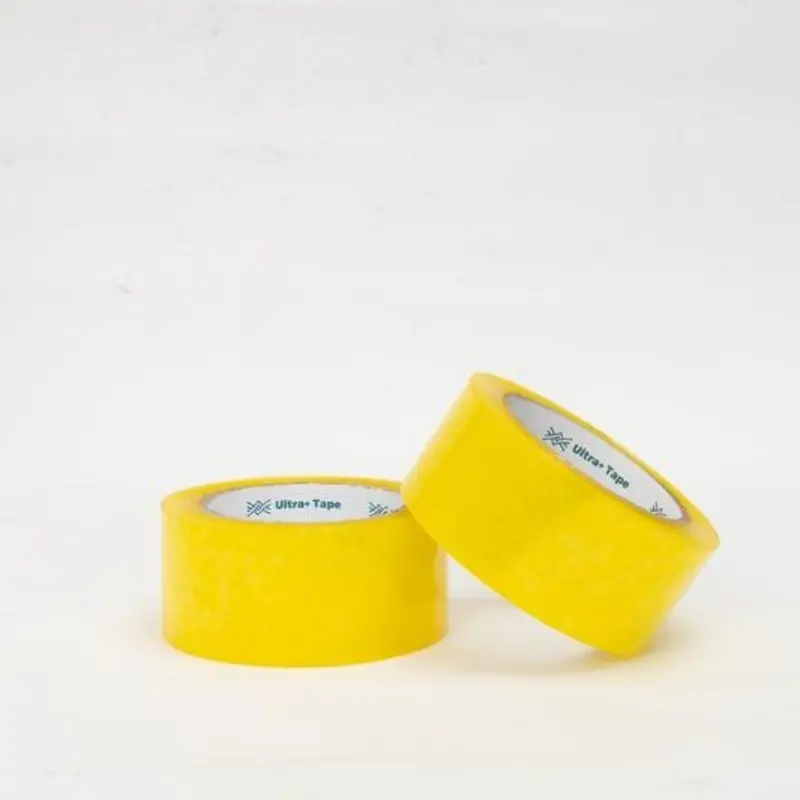
In modern packaging operations, sealing efficiency directly impacts production throughput, labor costs, and product protection during transit. Many facilities struggle with inconsistent seal quality, frequent roll changes, and adhesive failures that slow down operations and increase material waste. Understanding how biaxially oriented polypropylene adhesive tape enhances sealing performance helps operations managers make informed decisions about packaging materials that directly affect their bottom line. The right tape selection transforms sealing from a bottleneck into a competitive advantage by reducing application time, improving bond strength, and minimizing rework.
BOPP adhesive tape improves sealing efficiency through its unique combination of material properties and manufacturing processes that optimize both application speed and seal integrity. The biaxial orientation process creates molecular alignment in both machine and transverse directions, resulting in superior tensile strength and dimensional stability compared to non-oriented films. This structural advantage enables faster unwinding at high speeds without edge tearing or width distortion, while the precisely formulated acrylic or hot-melt adhesive systems provide immediate tack and progressive bond strength that secure cartons without requiring extended dwell time. These characteristics reduce the time between seal application and box movement, accelerate packaging line speeds, and decrease the labor intensity associated with manual sealing operations.
Material Engineering Behind Sealing Performance
Biaxial Orientation Process and Film Properties
The biaxial orientation manufacturing process fundamentally determines how bopp adhesive tape performs during high-speed sealing operations. During production, polypropylene film undergoes simultaneous stretching in both the machine direction and the transverse direction at elevated temperatures, typically between 130 and 165 degrees Celsius. This controlled stretching reorganizes polymer chains into aligned crystalline structures that dramatically increase tensile strength while maintaining flexibility. The resulting film exhibits tensile strength values ranging from 140 to 200 MPa in both directions, compared to 30 to 50 MPa for non-oriented polypropylene films.
This balanced strength profile prevents the tape from stretching unevenly during dispensing, which would otherwise cause misalignment, wrinkles, or incomplete contact with carton surfaces. When sealing equipment pulls bopp adhesive tape at speeds exceeding 30 meters per minute, the oriented film maintains consistent width and tracking without the edge curling that plagues lower-quality tapes. The dimensional stability inherent to biaxially oriented films ensures that each seal application delivers uniform contact pressure across the entire tape width, eliminating weak spots that could compromise package integrity during handling or shipment.
Adhesive Chemistry and Bond Development
The adhesive formulation coated onto bopp adhesive tape directly influences how quickly operators can move sealed packages to subsequent processing stages. Acrylic-based adhesives dominate commercial packaging applications because they develop bond strength progressively over several hours while providing sufficient immediate tack to hold cartons together during initial handling. This two-phase bonding characteristic allows packaging lines to maintain continuous flow without waiting for full cure, yet ensures that final bond strength reaches 8 to 12 Newtons per 25 millimeters of width within 24 hours at room temperature.
Hot-melt rubber-based adhesives offer even faster initial tack, making them suitable for packaging operations requiring immediate box stacking or palletizing. These formulations achieve 70 to 80 percent of their ultimate bond strength within seconds of application, though their temperature sensitivity requires careful storage and application environment control. The adhesive layer thickness, typically ranging from 20 to 40 microns, balances material cost against holding power, with thicker coatings providing enhanced adhesion to challenging surfaces like wax-coated or recycled corrugated materials that often appear in packaging workflows.
Surface Treatment and Release Coating Integration
Modern bopp adhesive tape incorporates corona or plasma surface treatments on the film backing to enable precise release coating application, which critically affects unwinding smoothness during sealing operations. The release coating, typically silicone-based, creates a controlled low-friction interface between wound layers that prevents adhesive transfer to the tape backing during storage and enables consistent unwind tension. Without proper release coating, operators experience frustrating variations in dispensing force that slow application speed and increase hand fatigue during manual sealing tasks.
The release force specification, measured in grams per 25 millimeters width, must balance easy unwinding against resistance to unintended unraveling during handling. Quality bopp adhesive tape maintains release values between 30 and 60 grams across its shelf life, ensuring that automated dispensers and handheld applicators deliver tape smoothly without sudden jerking or excessive drag. This consistency eliminates the need for frequent equipment tension adjustments that interrupt workflow and reduces the occurrence of torn edges that force operators to rethread dispensers or discard partially used rolls.
Operational Advantages in Packaging Workflows
Application Speed and Line Throughput
The physical properties of bopp adhesive tape enable significant acceleration of carton sealing cycles compared to alternatives like water-activated tape or pressure-sensitive paper tapes. Automated case sealers equipped with bopp adhesive tape routinely operate at speeds exceeding 25 cartons per minute, with some high-performance systems reaching 40 to 50 cartons per minute when optimized for standardized box sizes. This throughput advantage stems from the tape's ability to unwind cleanly at high speed, conform instantly to carton surfaces without moisture application, and provide sufficient immediate bond strength to allow immediate case discharge from the sealing station.
Manual sealing operations also benefit measurably from bopp adhesive tape characteristics, though the improvement magnitude depends on operator technique and dispenser quality. Trained operators using ergonomic handheld dispensers can seal 12 to 18 cartons per minute with bopp adhesive tape, compared to 8 to 12 cartons per minute with water-activated tape that requires wetting, positioning, and dwell time. The cumulative time savings across thousands of daily sealing cycles translates directly to reduced labor requirements or increased packaging capacity without additional staffing, making bopp adhesive tape a cost-effective choice even when unit price exceeds alternative sealing materials.
Consistency and Rework Reduction
Sealing efficiency encompasses not only application speed but also the reliability of achieved seals, and bopp adhesive tape excels in minimizing seal failures that necessitate rework. The uniform adhesive coating and consistent film properties ensure that each seal application delivers comparable performance regardless of environmental conditions within normal warehouse temperature ranges of 15 to 30 degrees Celsius. This predictability contrasts sharply with hot-melt adhesive systems that become overly fluid in warm conditions or brittle in cold environments, leading to intermittent seal failures that disrupt workflow.
Quality bopp adhesive tape demonstrates excellent adhesion to the recycled corrugated materials that comprise 80 percent or more of shipping cartons in many industries. The adhesive formulations tolerate dust contamination and surface irregularities better than alternative systems, reducing the incidence of edge lifting or complete seal failure during transit. When seal failures do occur, they typically manifest during initial quality checks rather than after shipment, allowing immediate correction before products leave the facility and avoiding the substantial costs associated with customer complaints, return shipping, and brand reputation damage.
Ergonomics and Operator Fatigue Management
The ease of dispensing bopp adhesive tape directly impacts operator productivity and comfort during extended shifts, particularly in facilities relying on manual sealing for variable-sized packages or low-volume production. The low unwind force required to dispense bopp adhesive tape reduces repetitive strain on wrist and forearm muscles, allowing operators to maintain consistent sealing speed throughout their work period without the performance degradation that accompanies fatigue. Well-designed handheld dispensers equipped with quality bopp adhesive tape enable one-handed operation, freeing the operator's other hand to position and stabilize cartons for precise seal placement.
The quiet operation of bopp adhesive tape dispensing contrasts favorably with the noise generated by pneumatic staplers or aggressive unwind sounds from poorly manufactured tapes, contributing to a more tolerable work environment that supports concentration and reduces stress. These ergonomic advantages, while difficult to quantify precisely, contribute to lower injury rates, reduced absenteeism, and improved employee retention in packaging operations where physical demands traditionally lead to high turnover and training costs that erode operational efficiency.
Performance Characteristics Affecting Seal Quality
Tensile Strength and Package Security
The mechanical strength of bopp adhesive tape directly determines its ability to maintain carton closure under the stresses encountered during handling, stacking, and transportation. Premium-grade bopp adhesive tape exhibits tensile strength values exceeding 160 MPa in both machine and transverse directions, enabling the tape to resist tearing when cartons undergo rough handling or when internal contents shift during transit. This strength reserve proves particularly valuable when sealing heavy cartons where the tape must support significant load without separating from the carton surface or tearing along stress concentration points near corners.
The elongation-at-break property, typically ranging from 100 to 150 percent for quality bopp adhesive tape, provides impact resistance that absorbs sudden shocks without immediate failure. This characteristic allows sealed cartons to withstand the repeated impacts encountered during conveyor transfers, sorting operations, and final delivery without seal compromise. The combination of high tensile strength and moderate elongation creates a resilient sealing system that maintains package integrity across diverse handling environments, reducing product damage claims and return logistics costs that directly affect profitability.
Temperature Resistance and Environmental Stability
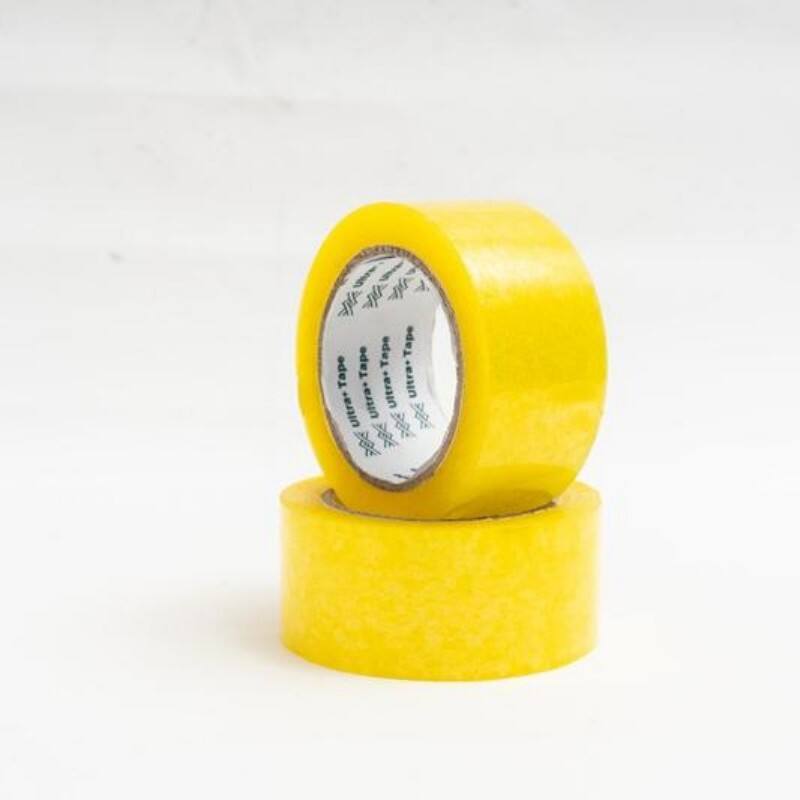
BOPP adhesive tape maintains consistent performance across the temperature ranges encountered in typical supply chain operations, typically from negative 10 degrees Celsius in refrigerated transport to positive 50 degrees Celsius in non-climate-controlled warehouses during summer months. The polypropylene film backing retains dimensional stability and mechanical properties throughout this range, while acrylic adhesives maintain adequate bond strength without becoming excessively soft or brittle at temperature extremes. This thermal stability eliminates the seasonal seal failure patterns that plague some alternative packaging systems.
The moisture resistance inherent to polypropylene film protects both the backing and adhesive from humidity-related degradation during storage or in high-moisture environments. Unlike paper-based tapes that lose strength when wet or gummed tapes that require controlled moisture application, bopp adhesive tape performs consistently regardless of ambient humidity levels between 20 and 80 percent relative humidity. This reliability simplifies inventory management by eliminating the need for climate-controlled tape storage and ensures predictable sealing performance in facilities lacking sophisticated environmental control systems.
Aging Resistance and Shelf Life Management
The long-term stability of bopp adhesive tape contributes to sealing efficiency by minimizing waste from expired inventory and ensuring consistent performance regardless of storage duration before use. Quality bopp adhesive tape maintains its adhesive properties and unwinding characteristics for 12 to 24 months when stored at moderate temperatures away from direct sunlight, compared to 6 to 12 months for some hot-melt tape formulations that undergo adhesive oxidation or crystallization over time. This extended shelf life reduces inventory turnover pressure and allows bulk purchasing that can lower unit costs.
The UV resistance of the polypropylene backing prevents yellowing and embrittlement that would compromise tape appearance and mechanical properties in applications involving outdoor storage or display. While bopp adhesive tape is not designed for prolonged outdoor exposure, its UV stability ensures that sealed packages maintain professional appearance and structural integrity during brief outdoor staging periods between facility transfer or during seasonal overflow storage situations. This durability supports brand image by ensuring that packages arrive at their destination with clean, intact seals rather than degraded, unsightly closures that suggest poor quality control.
Economic Impact on Packaging Operations
Material Cost Versus Total Ownership Cost
While bopp adhesive tape typically commands higher unit pricing than alternatives like water-activated tape or economy-grade pressure-sensitive tapes, comprehensive cost analysis reveals favorable total ownership economics when factoring labor, equipment, and failure costs. A standard 48-millimeter by 100-meter roll of quality bopp adhesive tape seals approximately 150 to 200 cartons depending on overlap technique, yielding a material cost of 0.02 to 0.04 currency units per carton. This compares to 0.01 to 0.02 units for water-activated tape, suggesting a material cost premium of 100 percent or more.
However, the labor savings from faster application speed reduce the per-carton sealing cost by 0.03 to 0.05 currency units when comparing automated bopp adhesive tape systems to water-activated tape equipment requiring operator intervention. The elimination of water reservoirs, brush maintenance, and moisture-related equipment cleaning further reduces operational overhead. When operations account for rework costs averaging 0.10 to 0.25 currency units per failed seal, the superior reliability of bopp adhesive tape often results in lower total cost per successfully sealed carton despite higher material pricing.
Equipment Investment and Maintenance Requirements
The compatibility of bopp adhesive tape with relatively simple dispensing equipment reduces capital investment requirements compared to hot-melt adhesive systems requiring heated reservoirs and temperature control. Manual handheld dispensers suitable for bopp adhesive tape range from 15 to 150 currency units depending on features and durability, while automated case sealers span 2,000 to 15,000 units based on speed capabilities and carton size versatility. These investment levels fall significantly below the 5,000 to 30,000 units required for water-activated tape systems incorporating wetting mechanisms and hot-melt equipment costing 10,000 to 50,000 units with ongoing energy consumption for adhesive heating.
The maintenance demands of bopp adhesive tape dispensing equipment consist primarily of periodic blade replacement and roller cleaning, typically consuming 1 to 2 labor hours per month for manual systems and 3 to 5 hours per month for automated equipment. This minimal maintenance requirement contrasts with water-activated tape systems requiring weekly water reservoir cleaning to prevent bacterial growth and hot-melt systems demanding regular adhesive filter changes and heating element inspection. The reduced maintenance burden lowers operational disruption and allows reallocation of technical resources to value-adding activities rather than packaging equipment upkeep.
Scalability and Throughput Flexibility
Operations using bopp adhesive tape can scale sealing capacity incrementally by adding manual dispensers or upgrading to semi-automated equipment without wholesale process redesign, supporting business growth without prohibitive capital requirements. A facility initially sealing 500 cartons daily with manual dispensers can progress to 2,000 cartons daily by adding a single semi-automated case sealer, then advance to 5,000-plus cartons daily with fully automated inline sealing equipment, all while maintaining the same bopp adhesive tape material specification and inventory management processes.
This scalability extends to handling diverse carton sizes and configurations, as bopp adhesive tape adapts readily to varying flap widths, surface textures, and closure patterns through simple dispenser adjustments or operator technique modifications. The flexibility eliminates the need for multiple specialized sealing systems dedicated to specific package types, reducing equipment investment, floor space consumption, and operator training complexity. Facilities managing diverse product lines particularly benefit from this versatility, as a single bopp adhesive tape specification often serves adequately across their entire packaging range with only width variation to match carton dimensions.
Implementation Considerations for Optimal Efficiency
Tape Selection Criteria and Performance Matching
Maximizing the sealing efficiency benefits of bopp adhesive tape requires careful matching of tape specifications to application requirements, beginning with appropriate adhesive selection based on carton surface characteristics and handling conditions. Acrylic adhesives suit general-purpose applications involving virgin or moderately recycled corrugated materials in climate-controlled environments, while synthetic rubber adhesives provide enhanced initial tack for challenging surfaces like silicone-coated release liners or heavily recycled fiber content with poor surface integrity. Hot-melt rubber formulations serve specialized needs where immediate high bond strength justifies their temperature sensitivity and shorter shelf life.
Tape thickness selection balances cost against performance, with standard 40-micron films adequate for light to medium-duty applications up to 15 kilograms per carton, while 50 to 65-micron films provide the puncture resistance and tensile strength required for heavy cartons or rough handling environments. The adhesive coat weight, typically ranging from 22 to 35 grams per square meter, must provide sufficient coverage for reliable adhesion without excessive cost or risk of adhesive squeeze-out that contaminates dispensing equipment. Systematic testing under actual operating conditions identifies the optimal specification that delivers required performance at minimum total cost.
Dispenser Configuration and Operator Training
Even premium bopp adhesive tape delivers suboptimal results when applied using poorly maintained or incorrectly configured dispensing equipment, making regular equipment assessment essential for sustained efficiency. Manual dispensers require proper blade sharpness to cleanly cut tape without leaving ragged edges that catch during subsequent applications, with blade replacement recommended every 3,000 to 5,000 sealing cycles depending on blade material and tape thickness. The tension adjustment mechanism must provide consistent resistance throughout roll depletion, as excessive tension causes premature operator fatigue while insufficient tension leads to loose application and potential seal failure.
Automated case sealer optimization focuses on tape head pressure, dispensing speed synchronization, and carton detection sensor calibration to ensure precise tape application without excessive stretching or inadequate surface contact. The pressure settings should compress the tape against carton surfaces with 2 to 4 kilograms of force per linear centimeter of tape width, sufficient to achieve full adhesive contact without crushing carton flaps or causing fiber damage that weakens structural integrity. Regular calibration using representative carton samples identifies drift in these parameters before it manifests as seal failures or quality complaints.
Quality Control Protocols and Performance Monitoring
Implementing structured quality control procedures ensures that bopp adhesive tape continues delivering expected sealing efficiency throughout production runs and across different tape lots. Incoming inspection should verify that each tape shipment meets specified tensile strength, adhesion values, and unwind force through standardized testing protocols, with rejection criteria established for deviations exceeding 10 percent from specification targets. This verification prevents introduction of substandard material that would compromise sealing operations and potentially damage equipment calibrated for compliant tape properties.
Ongoing performance monitoring tracks seal failure rates, operator sealing speeds, and tape consumption per carton to identify degradation trends that signal developing problems with tape quality, equipment condition, or technique drift. Establishing baseline performance metrics during initial implementation provides reference points for detecting changes requiring investigation, while periodic audits of sealing technique ensure operators maintain proper practices rather than developing counterproductive habits that reduce efficiency. This systematic approach sustains the sealing efficiency improvements that motivated the selection of bopp adhesive tape over alternative closure methods.
FAQ
What makes bopp adhesive tape faster to apply than other sealing methods?
BOPP adhesive tape applies faster primarily because it requires no moisture activation, heating, or curing time before sealed cartons can move to subsequent processing stages. The pressure-sensitive adhesive provides immediate tack upon contact with carton surfaces, allowing operators or automated equipment to seal and release cartons in a single continuous motion. The biaxially oriented film unwinds smoothly at high speeds without edge tearing or width distortion that would require operator intervention to correct, while the balanced tensile strength prevents stretching during application that would cause misalignment requiring repositioning. These characteristics enable automated systems to operate at speeds exceeding 40 cartons per minute and allow manual operators to achieve 15 to 18 seals per minute with proper technique and equipment.
How does tape width affect sealing efficiency for different carton sizes?
Tape width selection directly impacts material consumption, seal strength, and application speed, with optimal width typically matching or slightly exceeding the carton flap width to provide complete coverage without excessive overhang. Standard 48-millimeter bopp adhesive tape suits the majority of corrugated cartons with flap widths between 40 and 50 millimeters, providing adequate overlap onto top and bottom panels for secure closure. Narrower 36-millimeter tape reduces material cost for small cartons but risks inadequate coverage if centering is imperfect, while wider 72-millimeter tape offers enhanced strength for heavy cartons at proportionally higher material cost. Using appropriately sized tape eliminates time wasted on multiple strip application or dealing with excessive overhang that catches on equipment or adjacent packages during handling.
Can bopp adhesive tape maintain seal integrity in cold storage environments?
Quality bopp adhesive tape maintains reliable seal performance in refrigerated and frozen storage applications down to approximately negative 10 degrees Celsius when using cold-temperature adhesive formulations specifically designed for low-temperature environments. Standard acrylic adhesives become excessively firm below 0 degrees Celsius, losing the flexibility required to maintain intimate contact with carton surfaces as corrugated materials contract slightly in cold conditions. Cold-temperature formulations incorporate plasticizers that preserve adhesive flexibility and maintain peel adhesion values above 6 Newtons per 25 millimeters at negative 10 degrees. The polypropylene film backing retains mechanical properties throughout this temperature range, preventing brittleness that would cause tape cracking during carton handling. Proper adhesive selection based on minimum expected storage temperature ensures seal reliability across cold chain applications.
How frequently should automated dispensing equipment be serviced when using bopp adhesive tape?
Automated case sealing equipment using bopp adhesive tape typically requires preventive maintenance every 2,000 to 3,000 operating hours or quarterly intervals, whichever occurs first, to maintain optimal performance and prevent unexpected downtime. Routine maintenance includes inspecting and cleaning tape guide rollers to remove accumulated adhesive residue that can affect tape tracking, checking cutting blade condition and replacing when dull to ensure clean cuts without ragged edges, and verifying proper operation of pressure rollers that conform tape to carton surfaces. Additionally, periodic calibration of carton detection sensors and tape head positioning mechanisms ensures precise application alignment that maximizes seal quality. Facilities operating multiple shifts or handling dusty products may require more frequent servicing, while lower-volume operations in clean environments can sometimes extend intervals safely. Maintaining service logs enables data-driven optimization of maintenance schedules based on actual performance patterns rather than arbitrary time intervals.
Table of Contents
- Material Engineering Behind Sealing Performance
- Operational Advantages in Packaging Workflows
- Performance Characteristics Affecting Seal Quality
- Economic Impact on Packaging Operations
- Implementation Considerations for Optimal Efficiency
-
FAQ
- What makes bopp adhesive tape faster to apply than other sealing methods?
- How does tape width affect sealing efficiency for different carton sizes?
- Can bopp adhesive tape maintain seal integrity in cold storage environments?
- How frequently should automated dispensing equipment be serviced when using bopp adhesive tape?